
What makes a sustainable kilt?
An exploration of why traditional kilts are one of the most sustainable garments in fashion; crafted from natural wool, designed to last for decades, and created with repairability, longevity, and mindful craftsmanship at their core.
Fuensanta Guerrero Alba
4/8/20261 min read
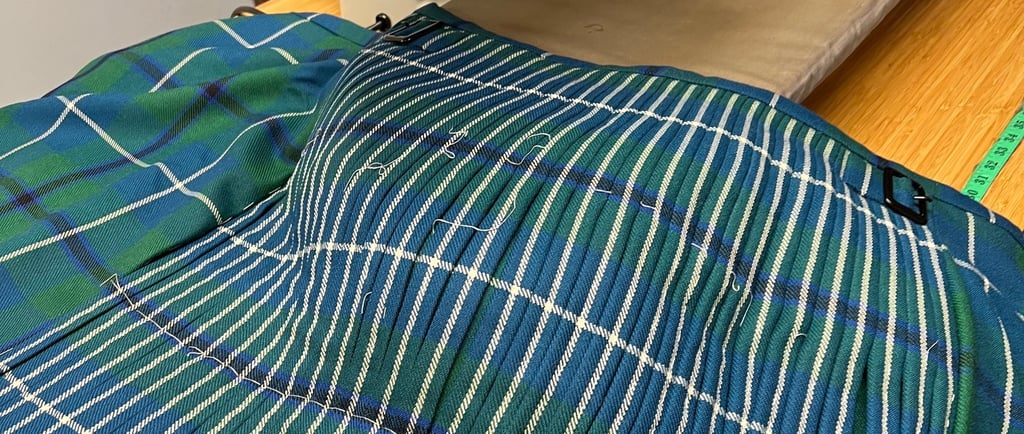
Sustainability in fashion is often discussed in terms of new fabrics and innovations. But one of the most sustainable garments in existence is the traditional kilt.
Why? Because it is designed to last.
A kilt is made with longevity in mind. Every decision in its construction, from the cloth to the stitching, is intended to ensure it can be worn, adjusted and cared for over decades rather than seasons.
A bespoke kilt is:
Made from natural wool fibres
Constructed for durability
Repairable and adjustable
Designed to be worn for decades (sometimes generations!)
Wool itself is a remarkable material. It is natural, renewable and biodegradable, but also incredibly resilient. When properly cared for, wool garments resist wear, recover their shape and age gracefully. Unlike many modern fabrics, it does not rely on synthetic fibres that shed microplastics or quickly lose their structure.
In my workshop, sustainability is show in my mindset as well as my work. My decisions include:
Choosing quality over volume
Working with responsible suppliers
Using fabric carefully to reduce waste
Reimagining offcuts through my “Second Chance” project
True sustainability is about longevity. A garment worn for 30 years has a far lower environmental impact than one worn for one season.
I love the thought that over time, a kilt becomes more than clothing. It carries memories of occasions, celebrations and milestones.
Craftsmanship
Blending passion and culture through unique kilt creations.
Heritage
Tradition
info@santalbakilts.com
+44 74058 73174
© 2026 All rights reserved.
Get in touch